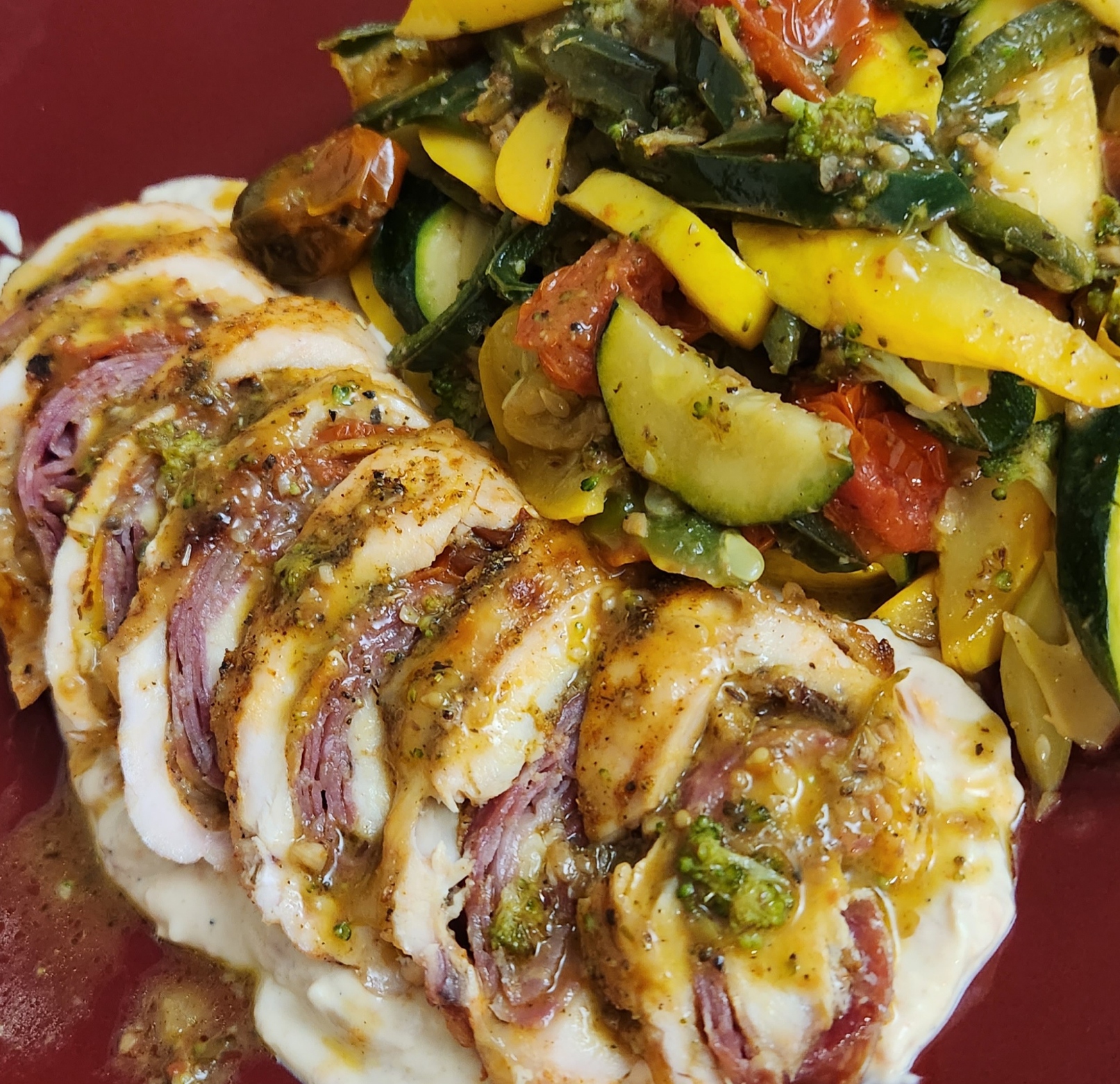
The story
The first time I made this, my dog had just had surgery and was wearing the cone. He wasn’t eating, so I did the responsible thing and made him boiled chicken. He wanted none of it. But this roulade? Suddenly he was a food critic—he’d only eat it if I fed him by hand. I don’t know what that says about him, but it says a lot about roulade.
I keep coming back to this dish because it’s the best kind of “fancy”: it looks like a restaurant plate, but the technique is basically “roll something delicious inside chicken and don’t overcook it.”
What is a roulade (and why Italy calls it something cuter)
“Roulade” is the general technique: roll meat (or even pastry) around a filling, cook, then slice to show off the spiral. In Italian cooking, roulades are commonly referred to as involtini—literally “little bundles”—and the fillings vary wildly: cheeses, cured meats, breadcrumbs, greens, mushrooms, pine nuts, you name it.
Why this one works
- The filling seasons the meat. Soppressata + capicola bring salt, spice, and fat. Provolone melts and holds it together.
- Sear + gentle finish. Brown for flavor, then finish without drying it out.
- The sauce is cold and tangy. Warm roulade + chilled yogurt sauce is a perfect contrast.
Variations (same technique, different mood)
- Classic: prosciutto + provolone + basil
- Earthy: sautéed mushrooms + spinach + fontina
- Spicy: pepperoni + mozzarella + calabrian chili
- Bright: lemon zest + herbs + parmesan
About that side dish
I served this with sautéed summer squash and roasted cherry tomatoes. If you can find those “Constellation” tomatoes—heirloom-ish, colorful, sweet—you get this ridiculously good sauce-y situation in the pan as they roast and collapse. That “tomato confit energy” is exactly what the yogurt sauce wants: sweet, roasted acidity to cut through the richness.