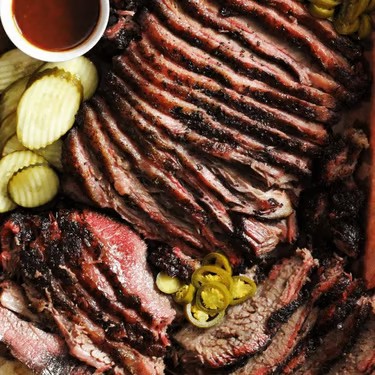
The story
The first brisket cook feels like you’re signing up for a marathon. You start early, you watch the thermometer like it’s a heart monitor, and you tell everyone “it’ll be ready when it’s ready” while quietly wondering if you ruined it.
Food nerd note: Brisket feels like a spice problem, but it’s really a heat-management problem. Most “bad brisket” is either rushed through the rest or sliced before it has time to settle.
And then you do it a few more times and realize brisket is mostly a mindset: set yourself up with the right prep, run steady heat, don’t panic at the stall, and treat resting like a real step instead of an afterthought.
A tiny bit of history (because brisket has lore)
Texas smoked brisket has a well-documented history tied to immigrant communities (including Jewish, Czech, and German Texans) and the evolution of smokehouses and delis into what we now call Texas barbecue.
The big decisions (the ones that actually move the needle)
- Trim: remove hard fat that won’t render; keep enough fat to protect the meat.
- Rub: salt + pepper gets you most of the way; everything else is signature.
- Wrap or not: wrap for speed and moisture; stay naked for bark.
- When to pull: “probe tender” beats chasing a single number.
- Rest: this is where brisket becomes brisket.
Brisket truth: if you slice early because you’re excited, brisket will punish you.
Rest is not optional—it’s the final step.
Leftovers are the reward
- Breakfast hash (brisket + potatoes + onions)
- Tacos (brisket + onions + lime + something spicy)
- Grilled cheese (dangerous in the best way)